
September 1, 2026
15 Questions to Ask Wedding Photographer
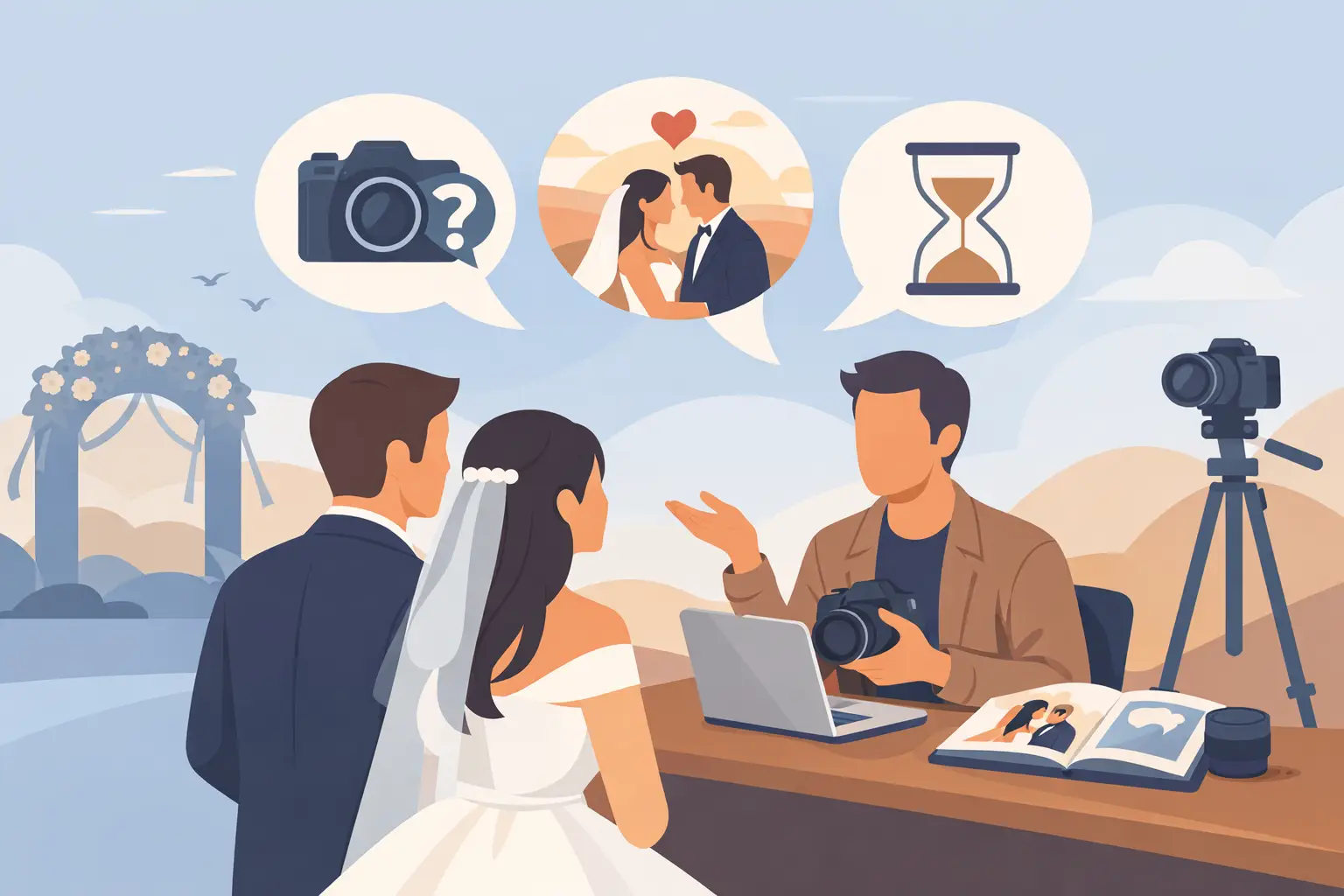
How would you describe your approach to a wedding day?
Listen for a philosophy, not a collection of buzzwords. Many photographers can say they shoot candidly or create editorial work. Ask what those words look like in practice. A thoughtful answer might explain how they create refined portraits with clear guidance, then remain observant enough to preserve unscripted interactions as they unfold.
You want to know whether their presence will suit the celebration you are planning. If you value a relaxed morning, an emotionally present ceremony, and time with the people you love, ask how they protect those parts of the experience. A photographer should have a plan without making your wedding feel like a production set.
Which images in your portfolio feel most like your natural work?
Portfolios are curated, and that is appropriate. Still, it is wise to ask which images represent the work a photographer consistently delivers, rather than a rare combination of extraordinary light, an elaborate venue, and perfect timing. Ask to see full galleries from weddings with a similar scale, setting, or timeline to your own.
A complete gallery shows how a photographer handles every chapter: the quiet anticipation of getting ready, difficult ceremony lighting, family portraits, a candlelit reception, and the fast-moving dance floor. It also reveals pacing. You should feel that the imagery tells a cohesive story, not that it relies on a few beautiful highlights.
How do you balance natural moments with portrait direction?
This question matters especially for couples who want authentic photographs but do not want to be left wondering what to do with their hands. The best experience is rarely completely hands-off or relentlessly posed. It is a balance of confident, gentle direction and room for real connection.
Ask how much portrait time they recommend and how they help couples feel at ease. A skilled photographer can offer small adjustments to posture, placement, and light, then give you space to settle into each other. The result should feel polished without looking performed.
What do you need from us before the wedding day?
Exceptional wedding imagery begins well before the ceremony. Ask whether your photographer builds a timeline with you, collaborates with your planner, requests family formal groupings in advance, or offers an engagement session. These details may sound logistical, but they are what create an unhurried experience.
The answer will also tell you how personalized the service will be. Your photographer should want to understand your priorities: perhaps you care most about a private first look, a sweeping architectural portrait at your estate venue, or uninterrupted time during cocktail hour with your guests. There is no universal formula, and your plan should reflect that.
How do you work with planners, venues, and other creative partners?
A wedding day is a shared effort. Your photographer should know how to communicate with a planner, coordinate respectfully with a videographer, and make decisions that serve the larger flow of the event. This is particularly valuable at resort, historic, and destination celebrations, where the property’s timing, light, and access can shape the visual plan.
Ask how they handle competing needs during the day. An experienced answer acknowledges that collaboration sometimes requires compromise. For example, a sunset portrait may be beautiful, but it should not pull you away from a meaningful toast or a once-in-a-lifetime moment with family without good reason.
What happens if the weather or timeline changes?
Even the most carefully designed wedding can shift. Florida rain, delayed transportation, a dark reception room, or a ceremony that runs long should not unsettle your photographer. Ask for an example of how they adapted to an unexpected change while still protecting the couple’s experience.
You are looking for preparedness without rigidity. A capable professional will have backup equipment, a practical lighting plan, and alternatives for portraits, but they will also bring a steady temperament. Calm is one of the most valuable things a photographer can offer when the day becomes unpredictable.
Will you be the person photographing our wedding?
If you are drawn to a particular artist’s work, make sure you understand who will be present on the wedding day. Ask whether they work with a second photographer, how that person is selected, and what coverage each person provides. For larger guest counts or celebrations unfolding across multiple spaces, a second photographer can offer meaningful perspective and fuller storytelling.
More importantly, ask how the team works together. You should not feel surrounded by cameras. The goal is thorough coverage with an unobtrusive presence, allowing you and your guests to remain fully part of the celebration.
How do you handle family portraits?
Family formals often carry more emotional weight than couples expect. These photographs may become the ones grandparents frame, the ones siblings return to decades from now, and the ones that take on new meaning as families change. Ask how the photographer organizes them efficiently while keeping the tone warm.
A well-prepared photographer will request a concise list in advance, identify helpful family members, and move through groupings with clarity. This avoids the familiar scene of people wandering off during cocktail hour while someone tries to remember every combination.
What is included in the collection, and what is the investment?
Ask for clarity early. Photography pricing can include different levels of coverage, engagement sessions, second photographers, travel, digital files, albums, print credits, or post-wedding support. The lowest number is not always the most meaningful comparison if one experience includes thoughtful planning and tangible heirlooms while another ends with a download link.
For couples who value a lasting record of the day, ask about physical products with the same care you give the photographs themselves. A handcrafted album is not an afterthought. It is the place where a wedding story can live in your home, be shared with future family, and become part of your heritage. At Frank Suero Photography, wedding collections begin at $3,500 and include a genuine-leather heirloom album, reflecting a belief that meaningful imagery deserves a lasting form.
When will we receive our photographs, and how are they delivered?
Turnaround time matters, but so does the care behind it. Ask when to expect a preview, the full gallery, and any album design process. Learn whether the gallery is curated and edited for a consistent visual finish, how long it remains available, and whether high-resolution files are included.
The delivery experience should feel considered rather than transactional. Your wedding photographs are not simply content to post and move past. They are a visual record of the people, promises, and atmosphere that made the day yours.
Can we see how you design albums and guide print selections?
This is for you if you already know that your images deserve more than a folder on a hard drive. Ask whether the photographer helps shape the album narrative, offers material options, and guides you toward print choices that work with your home and personal style.
A strong album design does not try to include every frame. It creates rhythm: anticipation, ceremony, joy, stillness, celebration. That editorial restraint is what allows the finished piece to feel timeless rather than crowded.
What are your backup plans?
It may not be the most romantic question, but it is an essential one. Ask about backup camera bodies, lenses, memory cards, image storage, and contingency plans for illness or emergency. You do not need a technical lecture. You need confidence that the photographer treats your memories with professional care from capture through delivery.
What do past couples say about working with you?
Reviews can be helpful, but ask a more revealing version of the question: what do couples most often say about the experience of having you there? The answer may speak to their ability to make people comfortable, their calm under pressure, their organization, or the emotional impact of the final images.
Technical skill is necessary. Yet the relationship you build with your photographer often determines whether you look relaxed, connected, and truly like yourselves in the photographs.
Do you have any questions for us?
A photographer who asks about your relationship, your families, the feeling you hope guests carry home, and the moments that matter most is showing genuine interest in your story. They are not trying to fit you into a template. They are beginning the work of seeing your celebration with care.
Choose the person whose work moves you, certainly. But also choose the person whose process lets you exhale. When trust is in place, you can stop managing the day and start living it – and that is where the most enduring photographs begin.


